
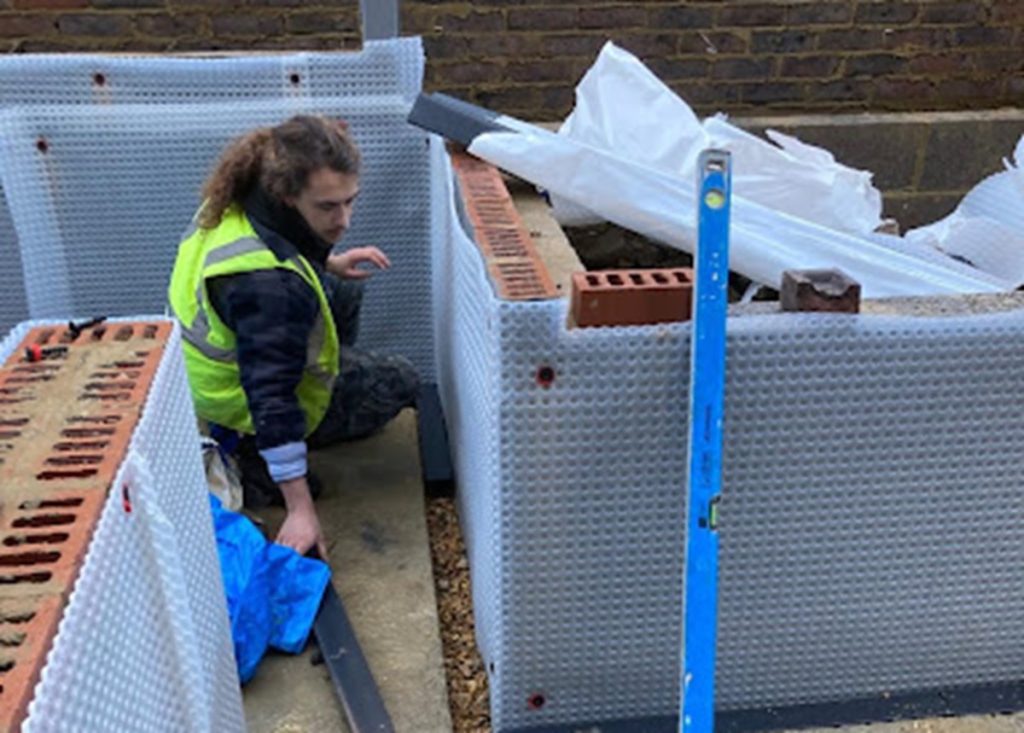
Archer Treatments provides specialist basement cavity drain systems in West Sussex, helping property owners manage groundwater and protect basement interiors using professionally designed waterproof membrane and drainage systems.
Cavity drainage can be particularly suitable for basement conversions, refurbishment projects and existing below-ground rooms experiencing persistent moisture or water ingress.
What Is a Basement Cavity Drain System?
A cavity drain system is a form of internal structural waterproofing.
Rather than applying a waterproof finish directly to the wall and relying on it to resist all water pressure, installers fit profiled waterproof membranes against the internal surfaces.
The small studs within the membrane create a cavity.
Any water entering through the original basement structure can then move behind the membrane without reaching the finished room.
The water is directed towards drainage channels and ultimately to a suitable discharge point.
Specialist Basement Cavity Drain Systems in West Sussex
An effective system consists of several components working together.
Waterproof Cavity Membranes
Specialist profiled membranes are installed over the basement walls and, where required, floors.
These separate the finished room from the damp or water-affected structure behind them.
Perimeter Drainage Channels
Water needs somewhere to go once it has entered the cavity.
Drainage channels are typically incorporated around the perimeter of the basement to collect and direct groundwater.
Sump and Pump Systems
When water cannot be safely discharged by gravity, it may be directed into a sump chamber.
A pump then removes the collected water from the basement to an appropriate discharge point.
Inspection and Maintenance Access
A well-designed drainage system should keep key drainage components accessible.
This allows channels, pumps and associated equipment to be inspected and maintained when required.
What Is the Difference Between Cavity Drainage and Tanking?
Homeowners researching basement waterproofing often encounter both terms.
They are two different ways of approaching essentially the same problem: preventing groundwater from damaging the finished basement.
Tanking
A tanking system creates a barrier designed to resist water passing through the walls or floor into the interior.
Cavity Drainage
A cavity drain system accepts that moisture may enter the original structure but ensures that it is controlled behind a waterproof membrane and safely removed.
Neither approach is automatically correct for every building.
The appropriate choice depends on the construction, ground conditions, water pressure and intended use of the space.
avity drainage can be considered for many types of below-ground waterproofing projects, including:
• Basement conversions
• Cellar conversions
• Existing leaking basements
• Renovation projects
• Residential properties
• Commercial basements
• Storage areas
• Lower-ground offices
• Properties where external waterproofing is difficult
It can also offer a practical solution where groundwater conditions may vary significantly throughout the year.
Can a Cavity Drain System Deal with Heavy Groundwater?
One advantage of cavity drainage is that the waterproofing system is designed to manage incoming water.
However, the drainage capacity, channels, pumps and discharge arrangements must all be designed appropriately for the property.
A system is only as effective as its individual components.
Simply installing a membrane without giving sufficient consideration to where water will ultimately go does not provide a complete waterproofing strategy.
Basement Cavity Drain Systems for Conversions
Converting a basement into usable accommodation can add valuable space to a property, but waterproofing must come before the project’s cosmetic elements.
A cavity drain system can sit behind the new internal surfaces, keeping finished walls and floors separate from the original damp structure.
Once the waterproofing system and other construction requirements have been properly addressed, the basement may potentially be developed into areas such as:
• Home offices
• Living rooms
• Utility rooms
• Gyms
• Games rooms
• Bedrooms
• Storage rooms
• Commercial workspaces
The waterproofing therefore becomes part of the unseen infrastructure protecting the finished room.

Why Drainage Design Is So Important
Water follows the easiest available route.
If a basement waterproofing system collects water but cannot remove it effectively, problems can still develop.
That is why drainage channels, collection points, and discharge arrangements must be considered as part of the complete system.
When a sump pump is required, proper installation and ongoing maintenance are also important.
Do Basement Sump Pumps Need Maintenance?
Yes.
Where the waterproofing system depends on a pump to remove groundwater, that pump performs an essential function.
Regular inspection and maintenance can help ensure the system remains ready to operate when groundwater levels rise.
Drainage channels should also remain accessible so they can be checked and serviced where necessary.
Property owners should therefore think of cavity drainage as a maintainable waterproofing system, not simply a membrane hidden behind the wall.
Cavity Drain Waterproofing for Existing Basements
Cavity membrane systems are not limited to new basement conversions.
They can also be used when an existing below-ground room suffers from ongoing moisture or recurring leaks.
This may be particularly useful where external excavation would be disruptive, restricted or impractical.
After assessing the structure, we can design an internal system to manage water while allowing new internal finishes to be installed in front of the membrane
Why Choose Our Professional Basement Waterproofing in West Sussex?
Basement waterproofing is specialist work.
Groundwater conditions, construction methods and individual buildings vary considerably, so the waterproofing specification needs to reflect the property rather than relying on a one-size-fits-all approach.
A professionally designed cavity drain system can provide a controlled route for groundwater, helping protect new finishes and making previously damp below-ground areas far more practical.
Speak to Archer Treatments
If you require a basement cavity drain system in West Sussex, contact Archer Treatments today.
Our specialist team can assess your basement, explain the available waterproofing options and recommend a cavity drainage solution appropriate to your property, its water conditions and how you plan to use the space.